Trump Tariffs Head to Supreme Court in Landmark Case Watched Worldwide: The Supreme Court Showdown Begins
Emily Rodriguez
11/30/2025
By Emily Rodriguez
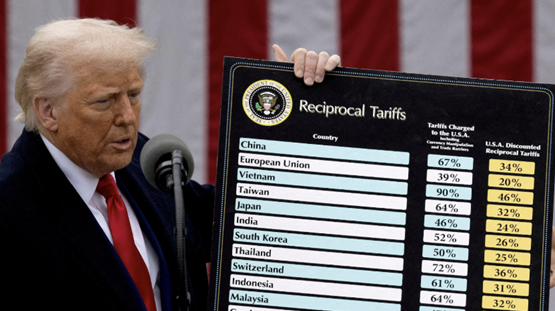
The U.S. Supreme Court on Wednesday will commence arguments likely concerning President Donald Trump's most sweeping tariffs, generally measuring from 10% to 50% for nearly all imports from all over the world, enforced through the International Emergency Economic Powers Act (IEEPA) of 1977, laws specifically meant to resolve national emergencies and not such mundane matters as trade disputes.
Trump's invocation of IEEPA in early February was based on his assertion that national emergencies exist when drugs are trafficked from China, Mexico, and Canada. He further magnified the term "national emergency" in April, when he began calling the U.S. trade imbalance an extraordinary and unusual threat and imposed tariffs. The administration claims that the policies are intended to shift the balance in trade and protect American industries, thereby ensuring national security and economic leverage.
On the other hand, it is considered an excessive expansion of executive authority. States, small businesses, and lawmakers from both parties believe the tariffs are unconstitutional because, according to them, taxes and duties can only be imposed by Congress. In their view, the IEEPA does not confer specific authority to impose tariffs, and categorizing a trade deficit as a national emergency is excessive.
If the Supreme Court sides with the plaintiffs challenging the tariffs, it could result in refunds of billions in tariff payments to collectors and significantly reduce the United States' control over international trade. This case contains a linchpin of a constitutional question: To what extent do the powers of the United States president extend concerning trade?
According to legal scholars, the decision would reconfigure the executive powers framework for decades. The plaintiffs contend that it has bypassed the legislative process under IEEPA, thereby compromising the separation of powers, because, under the law, a president can institute emergency trade regulations but may not mention tariffs. Further, they have been disputing whether, under the law, trade deficits could even be emergencies.
Moreover, over 200 legislators-all Democrats-and Republican Senator Lisa Murkowski have filed amicus briefs endorsing the plaintiffs. The senators warned that allowing any president to use emergency powers in trade negotiations sets a bad precedent and thereby grants the executive branch almost unchecked power over economic policy.
According to Trump, it is the most crucial trial. He warned that a negative decision "would tie his hands" in negotiations and leave a "weakened" and "financially foul" U.S. Although he will make no appearance in person at the hearings, he dubbed it an important date: "Not for me. For our country."
The tariffs are already wreaking havoc on America's business community.
An advertising company from the U.K. forecasts a $14 million tariff bill this year, which is seven times the total gross bill for all of 2024. "The disruption really was absolutely amazing," said CEO Rick Woldenberg, explaining how this company had to pull production lines for hundreds of items beginning in January.
Georgian importer Cooperative Coffees has so far counted tariffs at $1.3 million since April, with co-founder Bill Harris hopeful that "this is going to be ruled illegal" and "but we are really preparing for it to stick."
About $88 billion has been raised through emergency tariffs, with a potential total of $1.8 trillion by 2034, according to the Tax Foundation. However, the trade-offs are steep: GDP could be reduced by 0.4%, well over 428,000 jobs could be lost, and an additional $1,300 yearly tax burden could be placed on an average American household
It is evident that businesses and consumers stand at a fair few risks. Tariffs have forced many small- and medium-sized businesses to make painful choices among altering their supply chains, raising prices, or laying off employees.
Any Supreme Court decision will take months to be rendered. In the meantime, Congress has begun flexing some muscles. Three bipartisan Senate resolutions opposing Trump's tariffs have been passed, one of which calls for an end to the national emergency. While those measures may not lead anywhere in the House, they show increasing bipartisan concern with these issues.
If that Court were to side with Trump, the repercussions would be vast for expectations of presidential power. It would give future presidents carte blanche to unilaterally change trade rules based solely on emergency declarations. It would thus mark a paradigm shift in the balance of power, giving the executive branch another direct tool for economic governance.
If the Court ruled against him, it would confirm Congress's constitutional authority to set tariffs and taxes. It might stir the pot for large refunds to affected businesses, changes to trade policy, and compel the administration to seek legislative backing for all future tariff actions. This case, Learning Resources v. Trump, is not just about tariffs. It commenced with a balance of powers, checks on executive authority, and the future of trading relationships around the world.
The international front has been watching with acute interest. Several countries hit by tariffs have filed complaints against the United States with the World Trade Organization. They argue that U.S. measures violated international trade laws. In case the Supreme Court rules against Trump, it would create a solid case against them; but if it stands for him, it could be seen as an open door for all other leaders to use emergency powers as a maybe bargaining tool.
Now, the decision reaches far beyond Washington. It could change the global trading system, redefine Congress's role in economic affairs, and set a precedent for future presidents to go beyond their powers. The fight in front of the Supreme Court is testing everything, not just the President's tariffs, which include legal limits, economic vibrancy, and state will. Deciding whether to support or oppose the Preventive powers will, in one way or another, shape executive power and trade policies for future generations.
But that bit is, of course, a certainty-that for the world; this case is way more than revenue. It's about the very framework of American democracy and global commerce rules in the twenty-first century.
Word Cited
The Hill – Trump argues national security at risk if Supreme Court rules against tariffs https://thehill.com/homenews/administration/5640271-trump-national-security-tariffs-supreme-court
Hulehan, K., & Hulehan, K. (2025, November 4). What you should know about the Trump tariffs being challenged at the Supreme Court. Tax Foundation. https://taxfoundation.org/blog/trump-tariffs-supreme-court-decision/
White, A., & White, A. (2025, November 5). President Trump’s tariffs v. the Supreme Court’s duties. SCOTUSblog. https://www.scotusblog.com/2025/11/president-trumps-tariffs-v-the-supreme-courts-duties/
Wehner, G., & Wehner, G. (2025, November 3). Trump says tariffs critical to national security as Supreme Court prepares landmark decision. Fox News. https://www.foxnews.com/politics/trump-says-tariffs-critical-national-security-supreme-court-prepares-landmark-decision
Trump Tariffs Head to Supreme Court in Landmark Case Watched Worldwide: The Supreme Court Showdown Begins
© 2025. All rights reserved.
Address
Skyline High School
Legal Studies Magnet Program
7777 Forney Rd
Dallas, Texas 72227
Contact
info@SkylineLaw.org
Att: Mr. H. Rodriguez, Lead Teacher