The Price of Lack of Action: 2025 Government shutdown
Jayson Velázquez
By Jayson Vazaquez
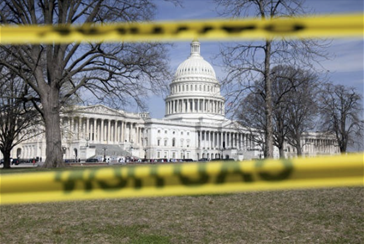
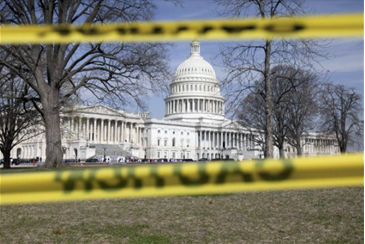
The 2025 federal government shutdown, which lasted 43 days from October 1st to November 12th, was more than a routine political disagreement. It quickly became the longest government shutdown in U.S. history, a major failure of political leadership that seriously affected hundreds of thousands of Americans. This wasn't one of those minor, week-long shutdowns where nobody really notices. This was a prolonged, painful breakdown that exposed deep flaws in how our government manages finances and formulates policy.
A government shutdown happens when Congress fails to pass the 12 annual appropriations bills needed to fund federal agencies for the upcoming fiscal year. Without these spending bills, the government literally runs out of legal authority to spend money. The political conflict leading to the 2025 shutdown was highly complex, but it centered primarily on major policy changes, particularly those related to healthcare and federal spending levels. One side advocated major cuts to programs such as Medicaid and resisted expanding healthcare subsidies, while the other side pushed back fiercely, seeking to undo policy changes that had already been passed over the summer. Both sides were unwilling to compromise on these high-stakes issues, turning the simple act of funding the government into a battle over national policy.
The 2025 government shutdown was a powerful demonstration that the current legal framework governing federal funding, specifically the Antideficiency Act, has become a weapon of political warfare rather than a guardrail of fiscal responsibility. This systemic failure not only paralyzed essential government functions but also unjustly imposed the massive financial and emotional burden of political gridlock on nonpolitical federal employees and the public they serve, revealing a critical need for structural budget reform.
This commentary will first examine the core legal mechanism, the Antideficiency Act, that forces the government to close, explaining its historical purpose and its modern misuse. Next, it will analyze the real-life consequences of this breakdown, using the 2025 shutdown as evidence of the profound human cost. Finally, it will conclude with a reflection on how Congress must prioritize a functional process over political point-scoring to restore both public services and public faith in the constitutional system.
The reason the government stops running when Congress can’t agree is not an accident; it’s a direct requirement of an old but important law called the Antideficiency Act. This law, often called the ADA, is the legal anchor for why thousands of federal workers are suddenly told to stay home. While the Constitution gives Congress the "power of the purse," the ADA specifies what happens when that purse is empty.
The Antideficiency Act fundamentally prohibits federal agencies from doing two key things: spending money beyond the amount approved by Congress and incurring obligations before the funds are appropriated. This principle is intended to prevent the executive branch from forcing Congress's hand by incurring unauthorized debts. However, the ADA permits some exceptions. Specifically, it permits government functions that are either expressly authorized by law to continue without funding or necessary for the "safety of human life or the protection of property."
Because most federal agency budgets are funded by annual appropriations bills, when those bills fail to pass, the legal rule applies: “no money, no work.” The agencies must quickly determine which employees are "excepted" and may continue working, and which employees are "furloughed".
In the context of the 2025 shutdown, the ADA’s rules were applied to roughly 2.9 million federal employees. We observed hundreds of thousands of people classified as "excepted" employees who were required to report to work every day for 43 consecutive days without pay. They were essentially legally obligated to work for free, waiting for Congress to pass a bill that would eventually grant them back pay. This is where the ADA feels less like a responsible fiscal check and more like an unsustainable, even cruel.
The ADA's intention to protect Congress's power is commendable, but its effect on modern politics is disastrous. It creates a high-stakes bomb (the shutdown) that politicians use to gain leverage. The legal requirement to shut down, designed in the 19th century to curb wasteful spending, now simply paralyzes the government and harms ordinary people in the 21st century, while the politicians responsible face no immediate personal consequences. This indicates a profound disconnect between the historical legal rule and its current political application.
The 2025 government shutdown was a significant constitutional and operational failure. It was legally rooted in the Antideficiency Act, which mandates a stoppage when funding lapses. Operationally, it resulted in a 43-day ordeal that undermined the financial security of federal workers and disrupted public services. Politically, it highlighted a severe dysfunction in which core welfare and healthcare policies are debated and decided not through deliberation but through the extreme leverage of a budget deadline.
Looking at the 2025 shutdown, it’s clear that responsible governance requires more than just following the legal rules. It requires prioritizing the public good. As students and future voters, we need to recognize when our elected officials are using the system to score political points versus solving problems. A government that compels its employees to work without pay for more than a month has lost its moral footing. It’s a powerful lesson in legal reasoning and political accountability. When a rule like the ADA is applied in a dysfunctional political environment, the results are painful, expensive, and completely unnecessary. The 2025 shutdown wasn't just a political hiccup; it was a crisis of conscience for the people we elected, and we have a right to expect a system that works better.
Works Cited
Kaia Hubbard, Government shutdown now over as federal agencies reopen and employees return to work CBS News (2025), https://www.cbsnews.com/live-updates/government-shutdown-latest-trump-signs-funding-federal-agences-opening/ (last visited Nov 23, 2025).
Government shutdown clock, The White House (2025), https://www.whitehouse.gov/government-shutdown-clock/ (last visited Nov 23, 2025).
Anthony Zurcher, Is the US government shutdown over, and why did it happen? BBC News (2025),https://www.bbc.com/news/articles/crrj1znp0pyo (last visited Nov 23, 2025).
The Price of Lack of Action: 2025 Government shutdown
© 2025. All rights reserved.
Address
Skyline High School
Legal Studies Magnet Program
7777 Forney Rd
Dallas, Texas 72227
Contact
info@SkylineLaw.org
Att: Mr. H. Rodriguez, Lead Teacher