The Future of Affirmative Action After Students for Fair Admissions v. Harvard
Jesus Hernández
1/31/2026
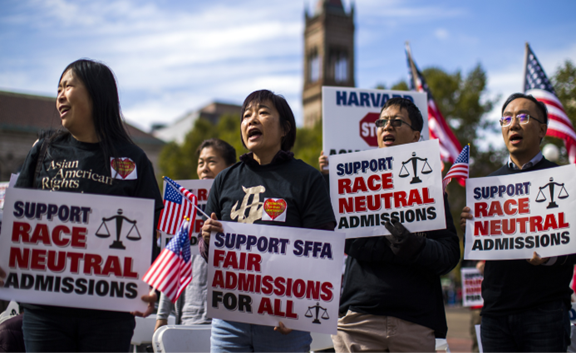
By Jesus Hernández
In 2023, the United States Supreme Court issued one of the most consequential education decisions of the twenty-first century in Students for Fair Admissions v. Harvard, 600 U.S. (2023). The Court held that race-conscious admissions programs at Harvard University and the University of North Carolina violated the Equal Protection Clause of the Fourteenth Amendment. In doing so, it effectively ended the model of affirmative action that had structured higher education admissions for decades. Although the decision is framed as a constitutional interpretation grounded in the principle of race neutrality, its broader significance lies in how it may reshape access to elite institutions and, by extension, the composition of American leadership.
For nearly half a century, universities operated under a framework that permitted limited consideration of race in pursuit of the educational benefits of diversity. That framework emerged in Regents of the University of California v. Bakke, 438 U.S. 265 (1978), where the Court rejected racial quotas but allowed race to be considered as one factor among many in holistic admissions. The principle was reaffirmed and clarified in Grutter v. Bollinger, 539 U.S. 306 (2003), which recognized student body diversity as a compelling governmental interest under strict scrutiny. For two decades after Grutter, selective institutions designed admissions systems that considered academic achievement, extracurricular involvement, socioeconomic background, geography, and, in limited fashion, race.
The majority opinion in Students for Fair Admissions rejected that approach. Chief Justice Roberts wrote that the admissions programs at issue lacked sufficiently defined objectives and relied on racial classifications in a manner inconsistent with the Constitution’s promise of individual equality. Although the Court stated that applicants may still discuss how race has shaped their personal experiences, it made clear that race itself cannot be used as a direct admissions factor. In formally overruling Grutter, the Court signaled a decisive turn toward a more rigid conception of equal protection, one that emphasizes formal colorblindness over remedial or diversity based rationales.
Much of the public debate has centered on constitutional doctrine, but the more enduring consequences may unfold outside the courtroom. Selective universities play an outsized role in shaping the nation’s leadership class. Graduates of a relatively small group of elite institutions are disproportionately represented in Congress, on the federal bench, in corporate boardrooms, and in influential cultural and policy making positions. Access to these institutions often translates into access to professional networks, mentorship opportunities, and pathways to power. Changes in admissions policies therefore reverberate far beyond campus admissions offices.
Evidence from states that previously banned affirmative action provides insight into possible outcomes. After California voters approved Proposition 209 in 1996, which prohibited race-conscious admissions at public universities, enrollment of Black and Latino students at the most selective campuses declined sharply. Research by economist Zachary Bleemer found that underrepresented minority students became significantly less likely to attend the most selective University of California campuses following the ban, with measurable effects on long-term educational and economic trajectories. See Zachary Bleemer, Affirmative Action, Mismatch, and Economic Mobility After California’s Proposition 209, 135 Q.J. Econ. 115 (2020). Similar patterns appeared in other states that adopted race-neutral mandates, including Michigan after its constitutional amendment barring affirmative action.
These enrollment shifts do not eliminate higher education opportunities altogether, but they tend to redistribute students across institutions of varying selectivity. Because institutional prestige often correlates with professional opportunities and earning potential, such redistribution can have lasting consequences. If highly selective institutions become less racially diverse, the demographic composition of elite professional pipelines may gradually narrow as well.
Universities have responded to the Court’s ruling by emphasizing socioeconomic disadvantage, geographic diversity, and individualized assessments of adversity. These approaches may preserve some level of diversity, yet socioeconomic status and race are not interchangeable categories. Persistent racial disparities in wealth, school quality, neighborhood segregation, and intergenerational opportunity mean that class-based measures alone may not replicate the outcomes previously achieved through race conscious review. Whether race neutral alternatives can meaningfully sustain representation at highly selective institutions remains uncertain.
Beyond education policy, the decision raises broader questions about democratic legitimacy. A representative democracy depends not only on equal voting rights but also on inclusive access to institutions that cultivate leadership. When certain communities perceive themselves as excluded from elite educational pathways, trust in governing institutions can erode. The dissent in Students for Fair Admissions, authored by Justice Sotomayor, argued that ignoring race in a society marked by enduring racial disparities risks entrenching inequality rather than alleviating it. The majority, by contrast, insisted that constitutional equality demands race neutrality, even if disparities persist.
This tension reflects a deeper philosophical divide over the meaning of equality. One vision understands equality as the absence of explicit racial classification. Another views equality as requiring attention to historical and structural conditions that shape opportunity. The Court has now firmly embraced the former approach. The practical effects of that choice will unfold gradually, through admissions cycles, enrollment data, and long term professional outcomes.
The implications may extend beyond universities. Legal challenges to corporate diversity initiatives and scholarship programs have already invoked reasoning similar to that adopted in Students for Fair Admissions. Although private employers are not directly governed by the Equal Protection Clause, litigation under civil rights statutes may test the boundaries of permissible diversity efforts. In this way, the Court’s decision may influence not only higher education but also workplace practices and institutional diversity strategies across sectors.
The future of affirmative action, then, is not merely a question of admissions criteria. It concerns how a society defines merit, how it balances formal neutrality with substantive inequality, and how it structures access to influential institutions. If elite universities serve as gateways to leadership, shifts in their admissions policies inevitably shape who participates in the nation’s political and economic life.
Whether the Court’s decision ultimately narrows or reshapes opportunity will depend on how institutions respond and how alternative policies evolve. What is certain is that Students for Fair Admissions v. Harvard represents a pivotal moment in the ongoing debate over equality, representation, and the meaning of constitutional fairness in a diverse democracy.
Work Cited
Students for Fair Admissions, Inc. v. President & Fellows of Harvard Coll., 600 U.S. ___ (2023).
Students for Fair Admissions, Inc. v. Univ. of N.C., 600 U.S. ___ (2023).
Grutter v. Bollinger, 539 U.S. 306 (2003).
Regents of the Univ. of Cal. v. Bakke, 438 U.S. 265 (1978).
Zachary Bleemer, Affirmative Action, Mismatch, and Economic Mobility After California’s Proposition 209, 135 Q.J. Econ. 115 (2020).
Raj Chetty et al., Mobility Report Cards: The Role of Colleges in Intergenerational Mobility, 356 Science 398 (2017).
Caroline Hoxby & Christopher Avery, The Missing “One-Offs”: The Hidden Supply of High-Achieving, Low-Income Students, Brookings Papers on Economic Activity (2013).
The Future of Affirmative Action After Students for Fair Admissions v. Harvard
© 2025. All rights reserved.
Address
Skyline High School
Legal Studies Magnet Program
7777 Forney Rd
Dallas, Texas 72227
Contact
info@SkylineLaw.org
Att: Mr. H. Rodriguez, Lead Teacher