Know your rigths
Karla Hernandez
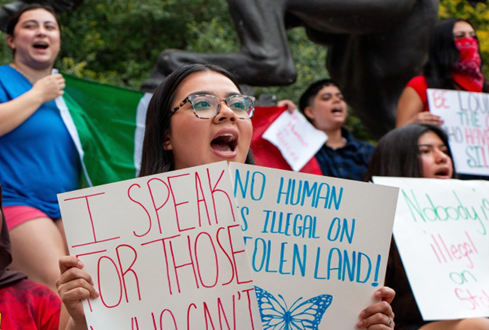
The United States established U.S. Immigration and Customs Enforcement (ICE) as a federal agency responsible for enforcing immigration laws across the country. In recent years, the agency’s increased visibility has caused fear and uncertainty among many immigrants, especially those who are unfamiliar with their legal protections. Because of this, understanding constitutional rights has become more important than ever. When individuals know their rights, they are better prepared to protect themselves and reduce the risk of unlawful treatment or discrimination.
The Fourteenth Amendment to the United States Constitution states that no state may deprive any person of life, liberty, or property without due process of law, and that all persons are entitled to equal protection under the law. In simple terms, this amendment protects everyone within the United States, not just citizens. The Constitution uses the word “person,” which has been interpreted to include non-citizens as well. This means that immigrants, regardless of their status, are entitled to certain fundamental legal protections.
Immigrants have several important rights. They have the right to remain silent and do not have to answer questions about their citizenship or immigration status. ICE agents generally cannot search a home without a valid judicial warrant signed by a judge or without consent. Individuals also have the right to an attorney, the right to due process, and the right to ask whether they are free to leave during an encounter with law enforcement. These protections exist to ensure fairness and to prevent the abuse of government power.
Although immigration enforcement policies have shifted under different administrations, including the Trump administration, constitutional protections remain in place. Knowing and asserting these rights can help individuals respond calmly and lawfully in stressful situations. Ultimately, understanding the structure of the law empowers people to protect themselves while also supporting the principles of fairness and equal justice that the Constitution promises.
Know your rights
(January 2026) by Karla Hernandez
© 2025. All rights reserved.
Address
Skyline High School
Legal Studies Magnet Program
7777 Forney Rd
Dallas, Texas 72227
Contact
info@SkylineLaw.org
Att: Mr. H. Rodriguez, Lead Teacher