It’s not just criminals, It’s profiling-
Cecilia Martinez
1/31/2026
By Cecilia Martinez
At the beginning of 2026, Vice President J.D. Vance stated publicly that the expansion of U.S. immigration enforcement efforts was still ongoing, including broader actions by U.S. Immigration and Customs Enforcement (ICE) to locate and remove undocumented immigrants from their residences. These developments have raised constitutional concerns because the United States Constitution guarantees fundamental rights to every person within its jurisdiction. The Fourteenth Amendment provides equal protection and due process under the law, and the Fourth Amendment protects individuals against unreasonable searches and seizures.
One of the most controversial developments was an ICE memo authorizing agents to enter private homes using administrative warrants rather than judicial warrants. Traditionally, a warrant to enter a residence required approval and a signature from a neutral judge. Allowing entry based on an administrative warrant, which does not require judicial authorization, has sparked concern among civil rights organizations and legal scholars. Critics argue that removing judicial oversight increases the risk of unconstitutional searches and weakens an important safeguard built into the Fourth Amendment.
In May 2025, a memo circulated within ICE stating that agents could carry out residential immigration arrests with an administrative warrant. The memo instructed agents to “knock and announce” and, if refused entry, to use only a “necessary reasonable amount of force” to gain access. This language has raised questions because the Fourth Amendment traditionally provides the highest level of protection for a person’s home. Courts have long recognized that entry into a private residence generally requires a judicially issued warrant. Without judicial review, concerns arise about expanded discretion and the potential for abuse of power.
Reports in 2025 also described a significant increase in immigration enforcement operations in cities such as Chicago, Newark, and Miami. According to media coverage, hundreds of arrests were made during a single weekend as part of a large-scale enforcement effort. The aggressive nature of these operations led some observers to question whether constitutional protections were being adequately considered during enforcement actions.
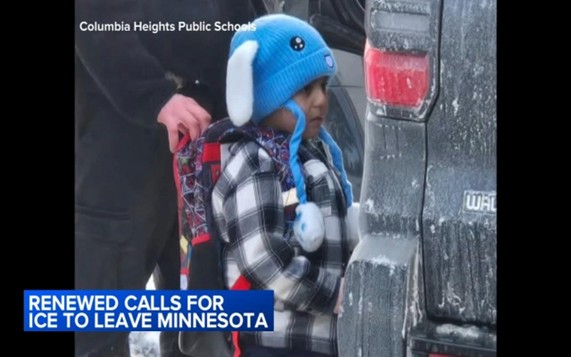
Another widely discussed incident involved the detention of a five year old child, Liam Conejo Ramos, who was reportedly taken into ICE custody along with his father in January 2026. News reports stated that the child was involved in the process of approaching his home during the enforcement action, which many critics described as inappropriate. He was later transported to a detention facility in Texas. The incident sparked national debate and legal challenges, and a judge ultimately blocked the deportation. The case raised serious concerns about the treatment of minors and whether enforcement policies were consistent with constitutional protections.
The detention of a young child brings attention to the Fourteenth Amendment, which states that no person shall be deprived of liberty without due process of law. The Supreme Court has long held that the word “person” includes noncitizens. A landmark case that reinforces this principle is Yick Wo v. Hopkins (1886). In that case, the Court ruled that a law applied in a discriminatory manner against Chinese immigrants violated the Equal Protection Clause. The decision established that constitutional protections apply to all individuals within the United States, regardless of citizenship status.
The issues raised by the ICE memo and the detention of Liam Conejo Ramos reflect similar constitutional themes. In Yick Wo v. Hopkins, the problem was not only the wording of the law but the way it was enforced. Likewise, modern immigration policies may appear neutral on their face, yet critics argue that the manner of enforcement can disproportionately affect certain communities. The broader concern is whether expanded executive authority, especially without judicial oversight, weakens constitutional safeguards.
Together, these events highlight ongoing tensions between immigration enforcement and constitutional limits. The Fourth Amendment protects individuals from unreasonable government intrusion into their homes, and the Fourteenth Amendment guarantees equal protection and due process to all persons within the country. As established in Yick Wo v. Hopkins, these protections do not depend on citizenship status. When enforcement policies expand without careful adherence to constitutional principles, they raise important legal and ethical questions. Upholding constitutional protections remains essential to ensuring that government power is exercised within lawful boundaries and that fundamental rights are preserved for everyone.
Work Cited
Holly Yan & Priscilla Alvarez, A preschooler was taken away by ice, but officials say they had no choice. Here's what we know CNN (2026) https://www.cnn.com/2026/01/23/us/liam-conejo-ramos-ice-wwk
Luke Barr, ICE memo allows agents to enter homes without judicial warrant: Whistleblower complaint ABC News (2026) https://abcnews.com/US/ice-memo-allows-agents-enter-homes-judicial-warrant/story?id=129436766
Yick Wo v. Hopkins, 118 U.S. 356, 6 S, Ct. 1064, 30 L. Ed. 220 (1886) https://supreme.justia.com/cases/federal/us/118/356/
It’s not just criminals, It’s profiling-
© 2025. All rights reserved.
Address
Skyline High School
Legal Studies Magnet Program
7777 Forney Rd
Dallas, Texas 72227
Contact
info@SkylineLaw.org
Att: Mr. H. Rodriguez, Lead Teacher