⚖️ November 2025: Law, Governance, and Constitutional Conflict in Contemporary America
Ayanna Celiz, Emily Rodriguez, Jayson Velázquez
By Jayson Vazaquez
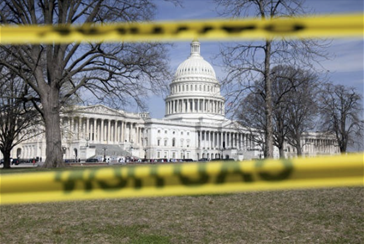
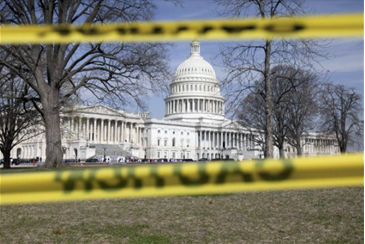
The 2025 federal government shutdown, which lasted 43 days from October 1st to November 12th, was more than a routine political disagreement. It quickly became the longest government shutdown in U.S. history, a major failure of political leadership that seriously affected hundreds of thousands of Americans. This wasn't one of those minor, week-long shutdowns where nobody really notices. This was a prolonged, painful breakdown that exposed deep flaws in how our government manages finances and formulates policy.
A government shutdown happens when Congress fails to pass the 12 annual appropriations bills needed to fund federal agencies for the upcoming fiscal year. Without these spending bills, the government literally runs out of legal authority to spend money. The political conflict leading to the 2025 shutdown was highly complex, but it centered primarily on major policy changes, particularly those related to healthcare and federal spending levels. One side advocated major cuts to programs such as Medicaid and resisted expanding healthcare subsidies, while the other side pushed back fiercely, seeking to undo policy changes that had already been passed over the summer. Both sides were unwilling to compromise on these high-stakes issues, turning the simple act of funding the government into a battle over national policy.
The 2025 government shutdown was a powerful demonstration that the current legal framework governing federal funding, specifically the Antideficiency Act, has become a weapon of political warfare rather than a guardrail of fiscal responsibility. This systemic failure not only paralyzed essential government functions but also unjustly imposed the massive financial and emotional burden of political gridlock on nonpolitical federal employees and the public they serve, revealing a critical need for structural budget reform.
This commentary will first examine the core legal mechanism, the Antideficiency Act, that forces the government to close, explaining its historical purpose and its modern misuse. Next, it will analyze the real-life consequences of this breakdown, using the 2025 shutdown as evidence of the profound human cost. Finally, it will conclude with a reflection on how Congress must prioritize a functional process over political point-scoring to restore both public services and public faith in the constitutional system.
The reason the government stops running when Congress can’t agree is not an accident; it’s a direct requirement of an old but important law called the Antideficiency Act. This law, often called the ADA, is the legal anchor for why thousands of federal workers are suddenly told to stay home. While the Constitution gives Congress the "power of the purse," the ADA specifies what happens when that purse is empty.
The Antideficiency Act fundamentally prohibits federal agencies from doing two key things: spending money beyond the amount approved by Congress and incurring obligations before the funds are appropriated. This principle is intended to prevent the executive branch from forcing Congress's hand by incurring unauthorized debts. However, the ADA permits some exceptions. Specifically, it permits government functions that are either expressly authorized by law to continue without funding or necessary for the "safety of human life or the protection of property."
Because most federal agency budgets are funded by annual appropriations bills, when those bills fail to pass, the legal rule applies: “no money, no work.” The agencies must quickly determine which employees are "excepted" and may continue working, and which employees are "furloughed".
In the context of the 2025 shutdown, the ADA’s rules were applied to roughly 2.9 million federal employees. We observed hundreds of thousands of people classified as "excepted" employees who were required to report to work every day for 43 consecutive days without pay. They were essentially legally obligated to work for free, waiting for Congress to pass a bill that would eventually grant them back pay. This is where the ADA feels less like a responsible fiscal check and more like an unsustainable, even cruel.
The ADA's intention to protect Congress's power is commendable, but its effect on modern politics is disastrous. It creates a high-stakes bomb (the shutdown) that politicians use to gain leverage. The legal requirement to shut down, designed in the 19th century to curb wasteful spending, now simply paralyzes the government and harms ordinary people in the 21st century, while the politicians responsible face no immediate personal consequences. This indicates a profound disconnect between the historical legal rule and its current political application.
The 2025 government shutdown was a significant constitutional and operational failure. It was legally rooted in the Antideficiency Act, which mandates a stoppage when funding lapses. Operationally, it resulted in a 43-day ordeal that undermined the financial security of federal workers and disrupted public services. Politically, it highlighted a severe dysfunction in which core welfare and healthcare policies are debated and decided not through deliberation but through the extreme leverage of a budget deadline.
Looking at the 2025 shutdown, it’s clear that responsible governance requires more than just following the legal rules. It requires prioritizing the public good. As students and future voters, we need to recognize when our elected officials are using the system to score political points versus solving problems. A government that compels its employees to work without pay for more than a month has lost its moral footing. It’s a powerful lesson in legal reasoning and political accountability. When a rule like the ADA is applied in a dysfunctional political environment, the results are painful, expensive, and completely unnecessary. The 2025 shutdown wasn't just a political hiccup; it was a crisis of conscience for the people we elected, and we have a right to expect a system that works better.
Works Cited
Kaia Hubbard, Government shutdown now over as federal agencies reopen and employees return to work CBS News (2025), https://www.cbsnews.com/live-updates/government-shutdown-latest-trump-signs-funding-federal-agences-opening/ (last visited Nov 23, 2025).
Government shutdown clock, The White House (2025), https://www.whitehouse.gov/government-shutdown-clock/ (last visited Nov 23, 2025).
Anthony Zurcher, Is the US government shutdown over, and why did it happen? BBC News (2025),https://www.bbc.com/news/articles/crrj1znp0pyo (last visited Nov 23, 2025).
The Price of Lack of Action: 2025 Government shutdown
By Ayanna Celiz
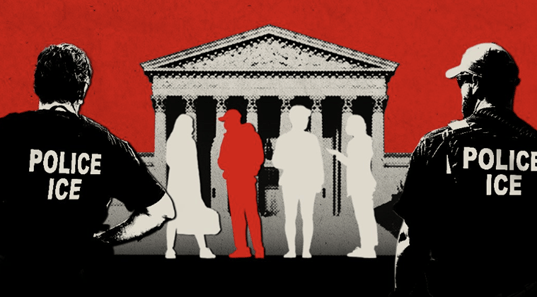
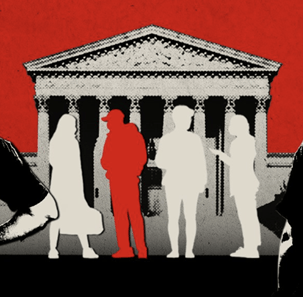
The constitutional limits on immigration enforcement have always sat in an uneasy tension with the federal government’s broad authority over immigration. That tension sharpened dramatically in 2025 after the Supreme Court’s decision to stay a lower-court injunction in Vasquez Perdomo v. Noem. In practical effect, the stay allowed Immigration and Customs Enforcement (ICE) to continue operations that relied heavily on traits closely tied to race and ethnicity, appearance, language, location, and occupation as the basis for stops. For many constitutional scholars and civil-rights advocates, the ruling suggested a step backward into an era where racial profiling was not an aberration but an accepted feature of immigration policing. This essay argues that ICE’s reliance on racialized suspicion undermines longstanding Fourth and Fourteenth Amendment principles, threatens the integrity of constitutional doctrine, and risks inflicting profound harm on immigrant communities and U.S. citizens alike.
For decades, Fourth Amendment doctrine has insisted on individualized suspicion as a bedrock requirement of any investigative stop. The Supreme Court’s decision in United States v. Brignoni-Ponce remains the clearest articulation of this principle in the immigration context. In that case, the Court held that Border Patrol agents could not stop a vehicle “solely because the occupants appeared to be of Mexican ancestry.”¹ Even though immigration enforcement often occurs near the border or in “interior” settings where the government historically claims expansive authority, the Court was unambiguous: appearance linked to ethnicity, without more, is not a constitutionally sufficient justification for a detention.
The Equal Protection Clause reinforces this principle. Although immigration law frequently tests the boundaries of equal protection, particularly because noncitizens do not always receive identical constitutional protections, the Supreme Court has consistently rejected racially discriminatory enforcement practices. Even when a statute is neutral on its face, it may still violate equal protection if enforced in a way that targets a discrete racial group without legitimate justification. In the immigration context, where Latino communities have historically borne the brunt of enforcement, the danger of discriminatory application is especially acute. The Court has noted, in other settings, that selective enforcement based on race offends the “basic equal protection principle that the Constitution protects individuals, not groups.”
Yet ICE’s recent operational tactics illustrate how easily constitutional lines can blur. Over the past several years, watchdog organizations including the ACLU and the American Immigration Council have documented ICE’s increasing use of deceptive or covert tactics, such as impersonating local police officers, posing as construction workers, or conducting pretextual “compliance checks” without warrants. Reports show that individuals are frequently approached because they speak Spanish, appear Latino, work in certain labor-intensive sectors, or are found at locations stereotypically associated with undocumented immigrants. These patterns do not rest on individualized suspicion; they rest on statistical generalizations and stereotypes.
The Vasquez Perdomo v. Noem litigation brought these issues to national prominence. In July 2025, a federal district court issued temporary restraining orders barring ICE from relying primarily on race, language, location, and type of work to justify stops. The order also required agents to identify themselves and to provide detainees with access to counsel, basic safeguards that aligned with ordinary due-process norms. However, the Supreme Court stayed the injunction in September 2025. The Court issued no majority opinion, but Justice Kavanaugh’s concurrence suggested that such traits could legitimately be considered as part of a “totality of the circumstances” analysis.
The stay is a quiet but deeply consequential shift. It reintroduces the idea that race and its proxies, accent, skin tone, clothing, and neighborhood, may once again play a role in establishing reasonable suspicion. This is difficult to square with Brignoni-Ponce, which rejected those same indicators as constitutionally insufficient. More troubling still, the ruling came through the Court’s “shadow docket,” without full briefing or argument. As scholars have warned, shadow-docket immigration decisions can reshape doctrine without the transparency and deliberation that usually accompany constitutional change.
The doctrinal problems are only part of the story. The real-world consequences are immediate and far-reaching. For one, the ruling increases the likelihood that U.S. citizens of Latino descent will be questioned or detained based solely on appearance or language. Studies show that naturalized citizens and long-settled residents, particularly Latinos, are routinely misidentified in ICE operations. The normalization of racialized suspicion makes these misidentifications more likely, not less.
The decision also threatens to erode community trust in law enforcement. When residents cannot distinguish between federal agents and local police or when ICE agents wear plain clothes and provide no clear identification, immigrant communities become understandably reluctant to report crimes or cooperate with investigations. This is not a speculative concern; public-safety research consistently shows that cooperation decreases when residents fear immigration consequences from even minor interactions with government authorities.
Equally troubling are the due-process implications of ICE’s methods. Reports of agents using ruses to enter homes or detain individuals raise serious concerns about consent, voluntariness, and the integrity of the warrant process. The Supreme Court has long emphasized that consent searches require clear, voluntary agreement, not acquiescence to misleading authority. When ICE agents deliberately obscure their identity, the possibility of meaningful consent evaporates.
Some scholars and policymakers have called for legislative safeguards. Congress could enact federal standards banning the use of race, ethnicity, or language as factors in immigration stops, standards that mirror past proposals such as the End Racial Profiling Act. Congress could also require ICE to collect and publish detailed stop data, allowing the public to evaluate whether certain communities are disproportionately targeted. Others advocate revisiting the qualified-immunity doctrine to ensure that individuals wrongfully detained by ICE have meaningful access to judicial remedies.
The constitutional stakes of the Court’s 2025 intervention are significant. By allowing ICE to rely on racialized suspicion, the Court risks weakening both the individualized suspicion requirement and equal-protection guarantees. The Fourth Amendment becomes more malleable, and the Equal Protection Clause less protective, when appearance and language are treated as legitimate indicators for law enforcement. If the current trajectory continues, the country may witness an immigration enforcement regime increasingly untethered from the principles the Constitution was designed to protect.
Ultimately, Vasquez Perdomo is a reminder that constitutional rights can contract quietly, without sweeping doctrinal declarations or landmark rulings. A single stay can shift power toward enforcement agencies and away from the individuals the Constitution was written to protect. Yet, properly interpreted, the Constitution still offers robust tools to restrain racialized enforcement. Preserving those tools will require vigilance from courts, legislators, practitioners, and the communities most affected. At stake is not only the integrity of immigration enforcement, but the vitality of the Fourth and Fourteenth Amendments themselves.
Citations
United States v. Brignoni-Ponce, 422 U.S. 873, 885–87 (1975).
See Yick Wo v. Hopkins, 118 U.S. 356, 373–74 (1886).
Whren v. United States, 517 U.S. 806, 813 (1996).
ACLU, This Deceptive ICE Tactic Violates the Fourth Amendment (2020).
American Immigration Council, The Supreme Court’s Decision and Racial Profiling in Immigration Raids (2024).
Temporary Restraining Orders, Vasquez Perdomo v. Noem, No. 2:25-cv-5311 (C.D. Cal. July 2025).
Order Granting Stay, Noem v. Vasquez Perdomo, No. 25A169 (U.S. Sept. 8, 2025).
Id. (Kavanaugh, J., concurring).
See Stephen Vladeck, The Shadow Docket (2023).
Brookings Institution, Racial Profiling by ICE and Effects on Latino Citizens (2023).
Univ. of Cincinnati Law Rev., Masked and Unidentifiable: ICE Tactics and Public Safety (2025).
See Schneckloth v. Bustamonte, 412 U.S. 218, 227 (1973).
ICE and Racial Profiling: Legal and Constitutional Implications
By Emily Rodriguez
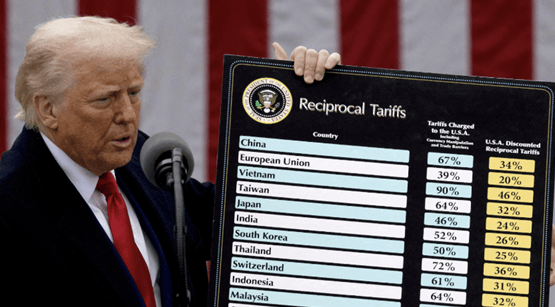
The U.S. Supreme Court on Wednesday will commence arguments likely concerning President Donald Trump's most sweeping tariffs, generally measuring from 10% to 50% for nearly all imports from all over the world, enforced through the International Emergency Economic Powers Act (IEEPA) of 1977, laws specifically meant to resolve national emergencies and not such mundane matters as trade disputes.
Trump's invocation of IEEPA in early February was based on his assertion that national emergencies exist when drugs are trafficked from China, Mexico, and Canada. He further magnified the term "national emergency" in April, when he began calling the U.S. trade imbalance an extraordinary and unusual threat and imposed tariffs. The administration claims that the policies are intended to shift the balance in trade and protect American industries, thereby ensuring national security and economic leverage.
On the other hand, it is considered an excessive expansion of executive authority. States, small businesses, and lawmakers from both parties believe the tariffs are unconstitutional because, according to them, taxes and duties can only be imposed by Congress. In their view, the IEEPA does not confer specific authority to impose tariffs, and categorizing a trade deficit as a national emergency is excessive.
If the Supreme Court sides with the plaintiffs challenging the tariffs, it could result in refunds of billions in tariff payments to collectors and significantly reduce the United States' control over international trade. This case contains a linchpin of a constitutional question: To what extent do the powers of the United States president extend concerning trade?
According to legal scholars, the decision would reconfigure the executive powers framework for decades. The plaintiffs contend that it has bypassed the legislative process under IEEPA, thereby compromising the separation of powers, because, under the law, a president can institute emergency trade regulations but may not mention tariffs. Further, they have been disputing whether, under the law, trade deficits could even be emergencies.
Moreover, over 200 legislators-all Democrats-and Republican Senator Lisa Murkowski have filed amicus briefs endorsing the plaintiffs. The senators warned that allowing any president to use emergency powers in trade negotiations sets a bad precedent and thereby grants the executive branch almost unchecked power over economic policy.
According to Trump, it is the most crucial trial. He warned that a negative decision "would tie his hands" in negotiations and leave a "weakened" and "financially foul" U.S. Although he will make no appearance in person at the hearings, he dubbed it an important date: "Not for me. For our country."
The tariffs are already wreaking havoc on America's business community.
An advertising company from the U.K. forecasts a $14 million tariff bill this year, which is seven times the total gross bill for all of 2024. "The disruption really was absolutely amazing," said CEO Rick Woldenberg, explaining how this company had to pull production lines for hundreds of items beginning in January.
Georgian importer Cooperative Coffees has so far counted tariffs at $1.3 million since April, with co-founder Bill Harris hopeful that "this is going to be ruled illegal" and "but we are really preparing for it to stick."
About $88 billion has been raised through emergency tariffs, with a potential total of $1.8 trillion by 2034, according to the Tax Foundation. However, the trade-offs are steep: GDP could be reduced by 0.4%, well over 428,000 jobs could be lost, and an additional $1,300 yearly tax burden could be placed on an average American household
It is evident that businesses and consumers stand at a fair few risks. Tariffs have forced many small- and medium-sized businesses to make painful choices among altering their supply chains, raising prices, or laying off employees.
Any Supreme Court decision will take months to be rendered. In the meantime, Congress has begun flexing some muscles. Three bipartisan Senate resolutions opposing Trump's tariffs have been passed, one of which calls for an end to the national emergency. While those measures may not lead anywhere in the House, they show increasing bipartisan concern with these issues.
If that Court were to side with Trump, the repercussions would be vast for expectations of presidential power. It would give future presidents carte blanche to unilaterally change trade rules based solely on emergency declarations. It would thus mark a paradigm shift in the balance of power, giving the executive branch another direct tool for economic governance.
If the Court ruled against him, it would confirm Congress's constitutional authority to set tariffs and taxes. It might stir the pot for large refunds to affected businesses, changes to trade policy, and compel the administration to seek legislative backing for all future tariff actions. This case, Learning Resources v. Trump, is not just about tariffs. It commenced with a balance of powers, checks on executive authority, and the future of trading relationships around the world.
The international front has been watching with acute interest. Several countries hit by tariffs have filed complaints against the United States with the World Trade Organization. They argue that U.S. measures violated international trade laws. In case the Supreme Court rules against Trump, it would create a solid case against them; but if it stands for him, it could be seen as an open door for all other leaders to use emergency powers as a maybe bargaining tool.
Now, the decision reaches far beyond Washington. It could change the global trading system, redefine Congress's role in economic affairs, and set a precedent for future presidents to go beyond their powers. The fight in front of the Supreme Court is testing everything, not just the President's tariffs, which include legal limits, economic vibrancy, and state will. Deciding whether to support or oppose the Preventive powers will, in one way or another, shape executive power and trade policies for future generations.
But that bit is, of course, a certainty-that for the world; this case is way more than revenue. It's about the very framework of American democracy and global commerce rules in the twenty-first century.
Word Cited
The Hill – Trump argues national security at risk if Supreme Court rules against tariffs https://thehill.com/homenews/administration/5640271-trump-national-security-tariffs-supreme-court
Hulehan, K., & Hulehan, K. (2025, November 4). What you should know about the Trump tariffs being challenged at the Supreme Court. Tax Foundation. https://taxfoundation.org/blog/trump-tariffs-supreme-court-decision/
White, A., & White, A. (2025, November 5). President Trump’s tariffs v. the Supreme Court’s duties. SCOTUSblog. https://www.scotusblog.com/2025/11/president-trumps-tariffs-v-the-supreme-courts-duties/
Wehner, G., & Wehner, G. (2025, November 3). Trump says tariffs critical to national security as Supreme Court prepares landmark decision. Fox News. https://www.foxnews.com/politics/trump-says-tariffs-critical-national-security-supreme-court-prepares-landmark-decision
Trump Tariffs Head to Supreme Court in Landmark Case Watched Worldwide: The Supreme Court Showdown Begins
© 2025. All rights reserved.
Address
Skyline High School
Legal Studies Magnet Program
7777 Forney Rd
Dallas, Texas 72227
Contact
info@SkylineLaw.org
Att: Mr. H. Rodriguez, Lead Teacher